Unconventional Singh · Brussels

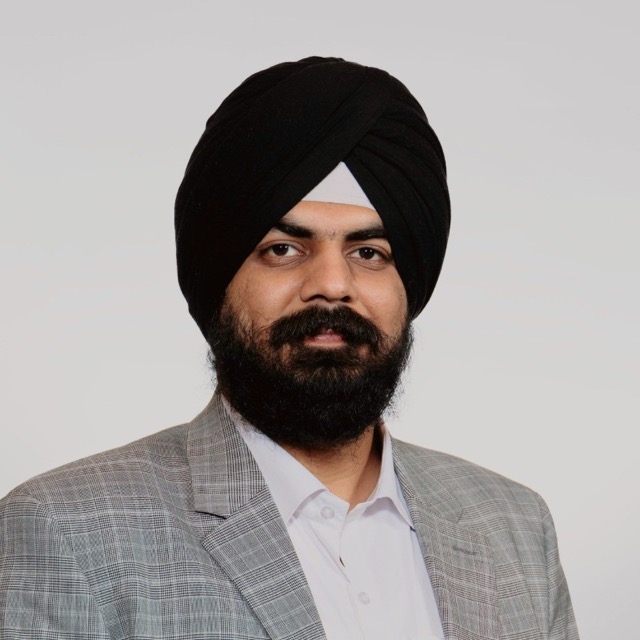
Karanpreet Singh

Physicist. Convincing matter to compute.

Computing beyond silicon, and occasionally beyond convention.

MSCA Doctoral Researcher · Université libre de Bruxelles

The background is a standing wave, computed live. Your pointer tunes it; the colour is its wavelength. how this works ↓

01

Silicon computes with switches.

02

Chemistry computes with reactions.

03

Light computes through propagation.

The substrate changes. The question remains: How can physical systems learn?

01 — Research

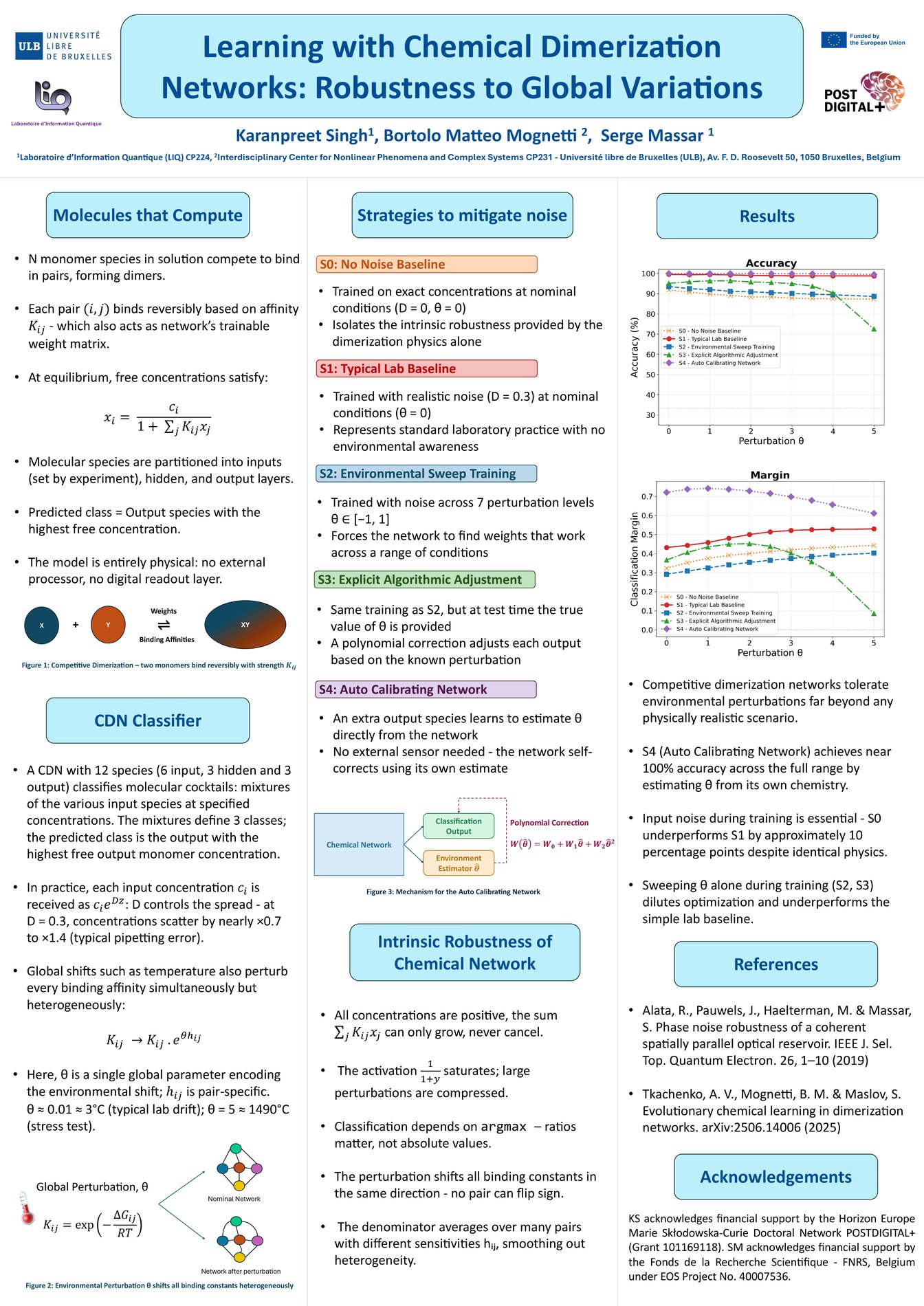
Teaching matter to learn

Learning need not be confined to algorithms running on GPUs or TPUs. Given the right dynamics, a physical substrate can learn directly — in its own currency: concentrations, phases, amplitudes.

Teaching a soup to classify

Doctoral research · Université libre de Bruxelles

The brain is not the only chemistry that computes: every living cell senses, decides and regulates with reactions alone — no neurons involved. I work on training such systems directly. The networks I study are held away from equilibrium, where the error signal must be carried by a companion dynamics rather than the network’s own forward behaviour; done properly, dimerising species learn genuinely nonlinear decision boundaries.

Manuscript in preparation — details stay thin until it is out.

Photonic computing

Doctoral research · Université libre de Bruxelles

Light does linear algebra by existing: interference sums amplitudes, propagation applies the transform, and many wavelengths share one waveguide without ever speaking to each other. That makes photonics a natural substrate for the heaviest half of machine learning — the matrix multiplication — at femtojoule energies and the speed light already travels. My doctoral work asks how much of the rest of a neural network light can absorb before electronics has to intervene.

Sound as a computing medium

Master’s research · Queen’s University

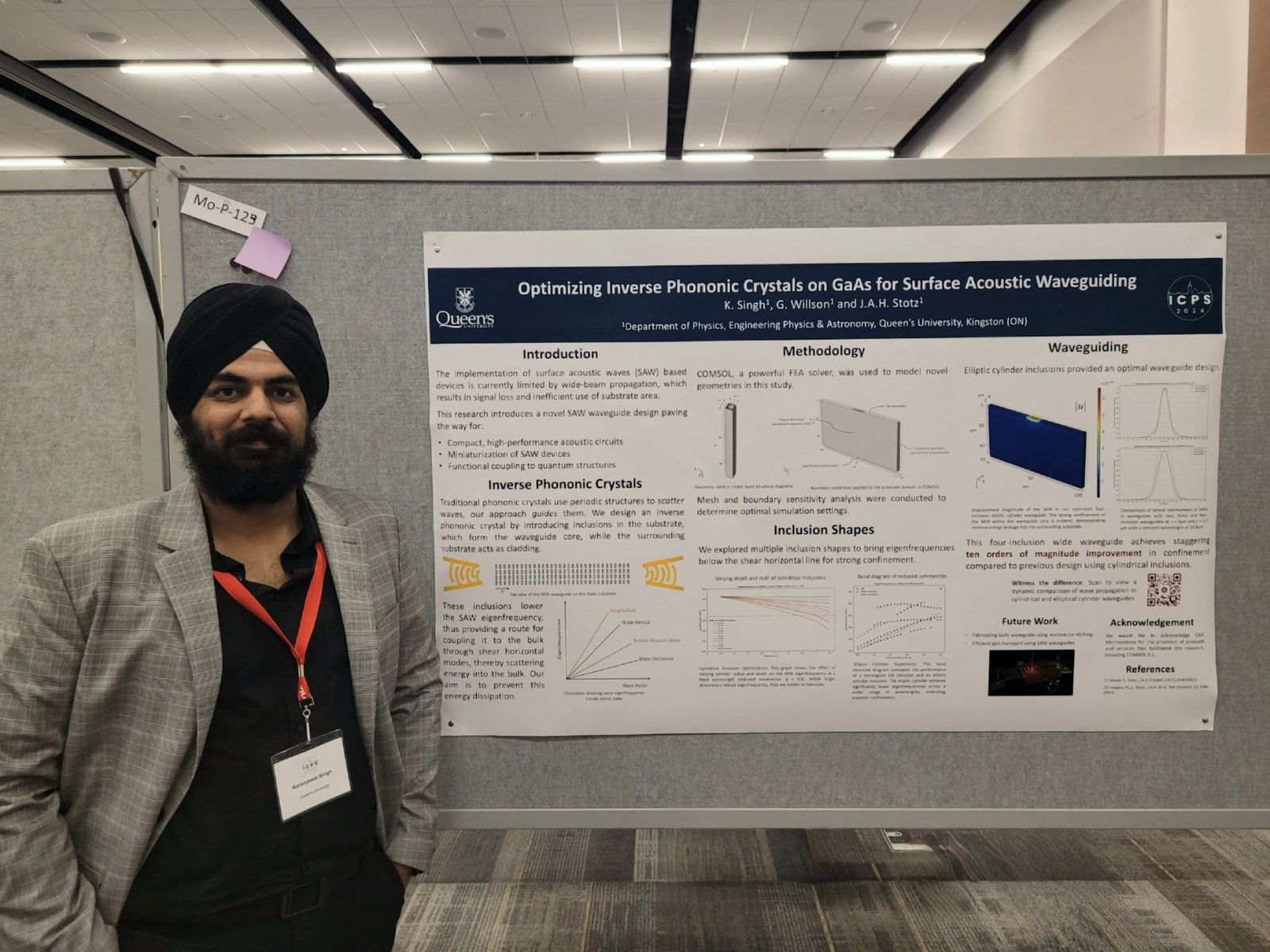
Surface acoustic waves carry information along a chip’s face — until the phononic crystal guiding them couples the Rayleigh mode to shear-horizontal bulk waves and the energy drains into the substrate. Swap the crystal’s cylindrical inclusions for elliptical ones and the reduced symmetry pulls the surface mode below the sound line: the radiation pathway closes, and confinement improves by ten orders of magnitude. The habit it left me with: make the substrate do the work.

Publications

  1. 2025

    A Phononic Crystal Waveguide Using Surface Waves Below the Sound Cone

    Applied Physics Letters 126(2), 022204

    K. Singh, G. Willson, J. A. H. Stotz

    Reduced-symmetry inclusions drop the surface mode below the sound line, closing the radiation pathway into the bulk.

  2. 2025

    Optimizing Phononic Crystal Waveguides for Enhanced SAW Confinement

    Physica Status Solidi (b)

    K. Singh, G. Willson, J. A. H. Stotz

    A full sweep of waveguide width, inclusion aspect ratio and depth — where confinement, bandwidth and fabricability meet.

  3. 2018

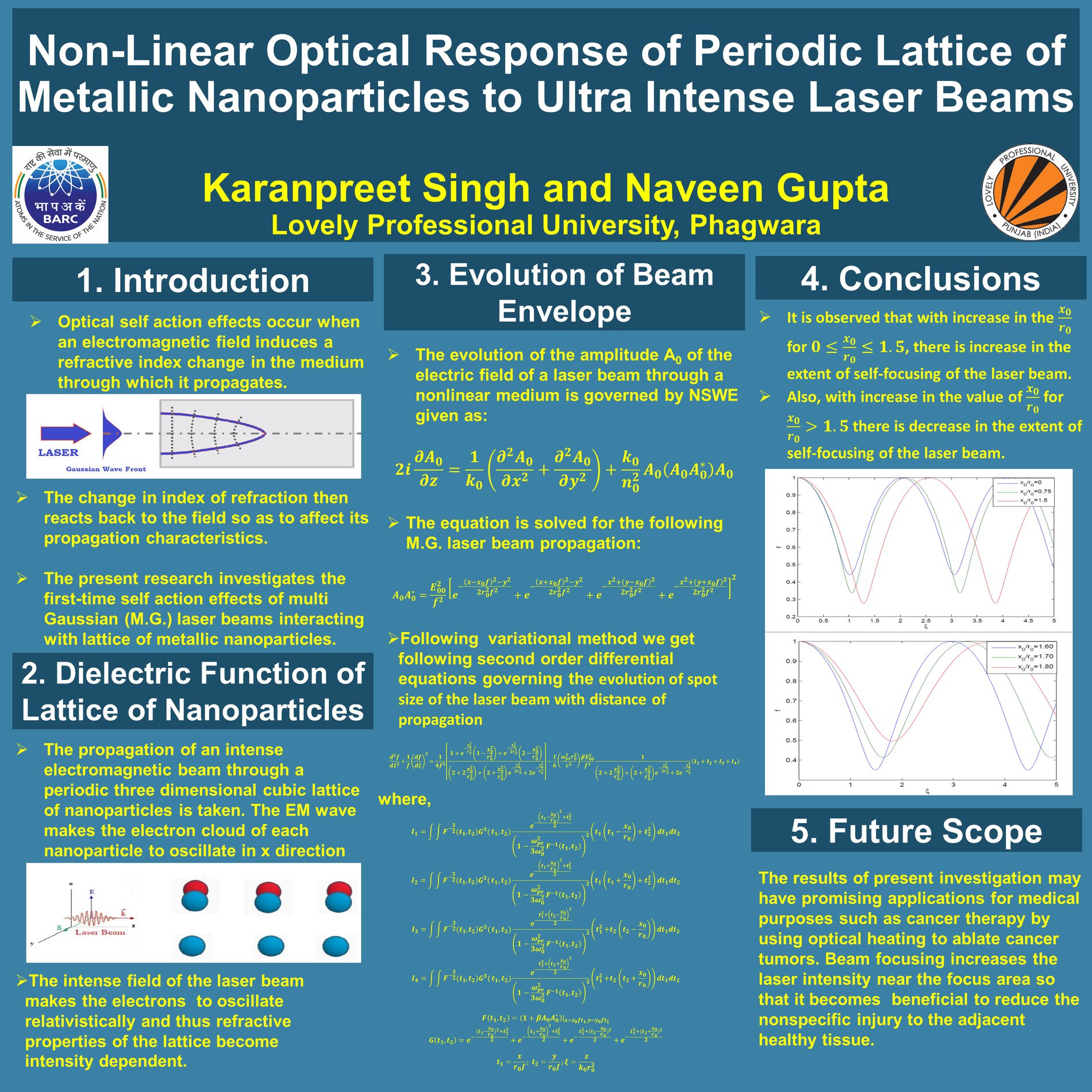
    Nonlinear optical response of a periodic lattice of metallic nanoparticles to ultraintense laser beams

    AIP Conference Proceedings 2115(1), 030175

    K. Singh, N. Gupta

    Undergraduate work, and the first time nonlinear optics felt like a place I could live.

  4. soon

    Training out-of-equilibrium chemical networks

    Manuscript in preparation, 2026

    K. Singh and collaborators

    A learning rule for driven reaction networks — see the research strand above.

Talks and Posters

  • 2024 Optimizing Inverse Phononic Crystals on GaAs for Surface Acoustic Waveguiding · ICPS, Ottawa
  • 2019 An all-optical transistor by nonlinear refraction in a gold-nanoparticle lattice · ICANDEE, Gwalior
  • 2019 Third-harmonic generation of a q-Gaussian beam in C60 · ICANDEE, Gwalior

Selected projects

2023

A photonic neuron, fabricated

A GHz-range optical neuron on the broadcast-and-weight paradigm — microring weight banks, wavelength-multiplexed inputs, Mach–Zehnder activation — taped out through AMF Singapore. Silicon, not simulation.

2022–24

Cleanroom work

Fabrication recipes and hand-made interdigital transducers in a Class 1000 cleanroom. Nothing calibrates a simulation like watching it fail on a wafer.

2022

FDTD from scratch

A finite-difference time-domain solver written from the update equations up, perfectly-matched layers included. The exercise that makes every commercial solver legible.

Also: an undergraduate thesis on shooting lasers at orbital debris. An unreasonable question, taken seriously — roughly the pattern of everything since.

02 — Field notes

Open threads

Unfinished by design — questions, not positions.

  • readout

    What a physical network computes depends on where you look. Reading the ratio of two concentrations instead of one buys expressivity for free. “Choose a better observable” is an underused move.

  • equilibrium

    Tidy physical-learning theory assumes energy functions and symmetric responses. Living systems burn fuel and run driven. The interesting regime is exactly the one the theory excludes.

  • substrate

    Chemistry, light and sound keep turning out to be the same mathematics in different clothes. How far does that go — is trainability substrate-independent, or does the physics always leave fingerprints?

  • reading

    Working through the non-equilibrium thermodynamics literature properly rather than opportunistically. Ask me how it is going.

Rooms I’ve been in

Photograph to come

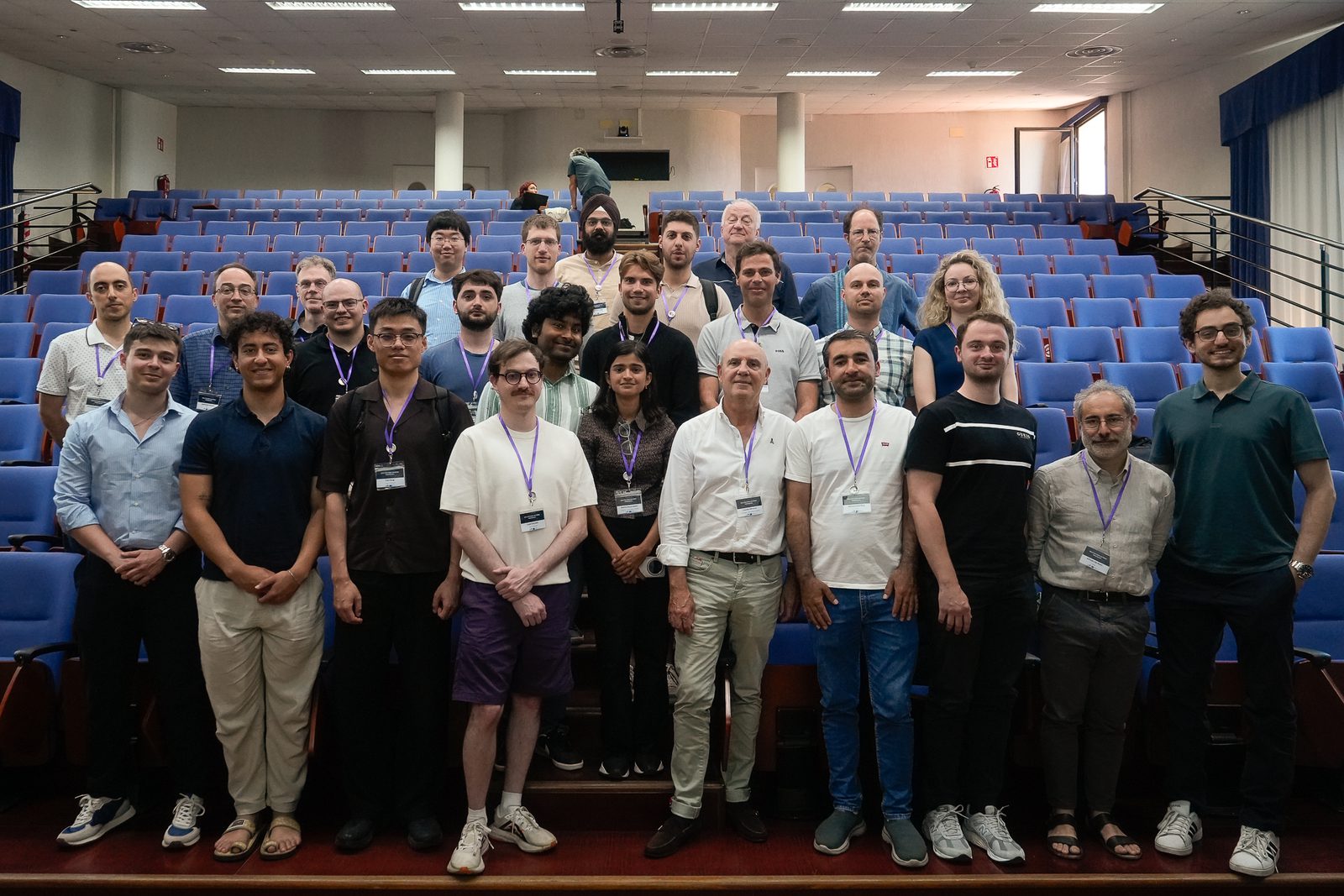
Erice, Sicily

92nd Workshop on Unconventional Computing

Ettore Majorana Foundation · April 2026

Photograph to come

Palma de Mallorca

Workshop on Machine Learning, AI & Neuromorphic Computing

POSTDIGITAL+ · May 2026 · chaired the plenaries

Photograph to come

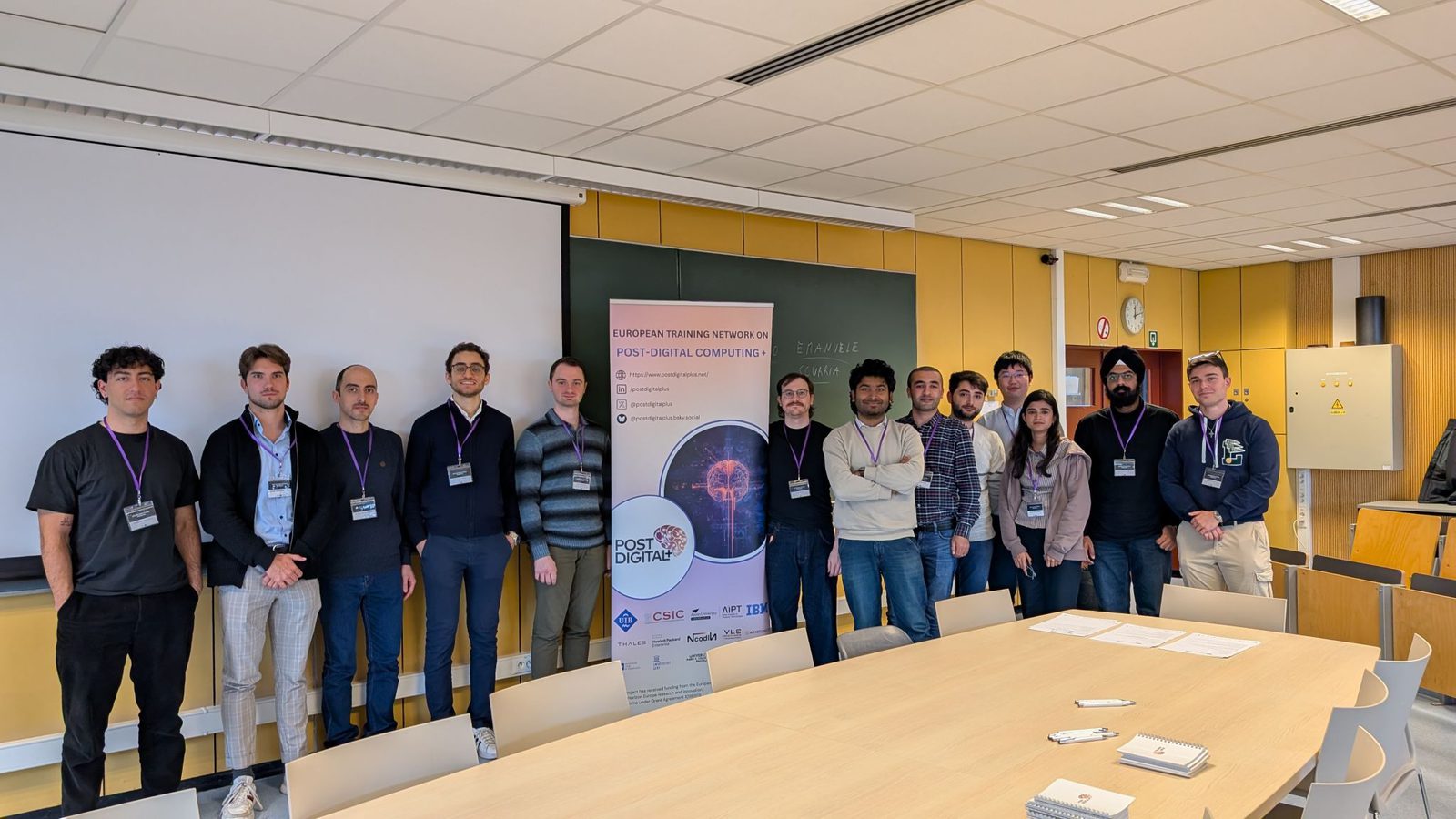
Brussels

Training Physical Neural Networks Beyond Backpropagation

POSTDIGITAL+ · January 2026 · chaired the plenary

Member of the POSTDIGITAL+ network, a Marie Skłodowska-Curie European Doctoral Network on Computing for Artificial Intelligence.

03 — About

Unperturbed — who’s Karanpreet?

Karanpreet Singh
Karanpreet Singh · Brussels, 2026

Brussels is home these days, and after Canada it feels wonderfully small — everything is an hour away, and a cheap train turns a free Saturday into a different country. The current plan is to buy a bicycle and find out how much of the EuroVelo network these legs can be talked into.

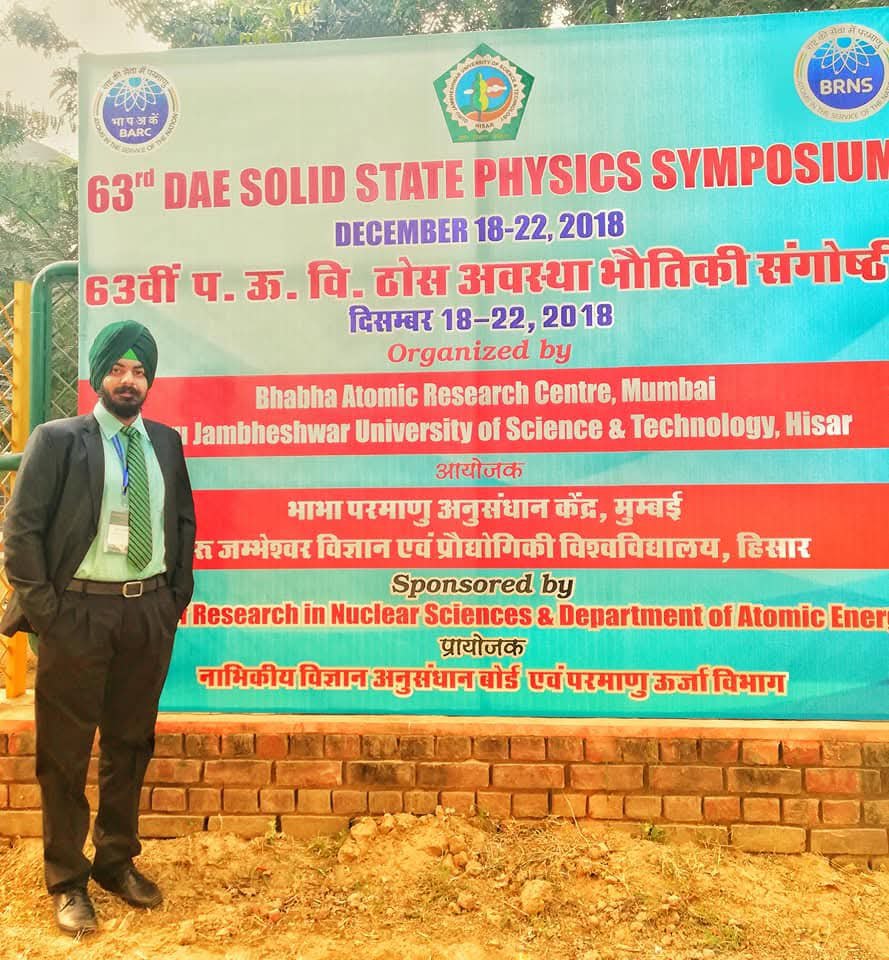
I have lived in three countries so far, and each one left something. India raised me and gave me the confidence to reach for the stars. Canada made me independent — it is where I learned to live as an adult, to look after myself, and to enjoy doing it. Belgium is six months in and still unwrapping.

Off duty I run on Punjabi music — if it is new to you, start with Diljit Dosanjh; Ranjha is a good door in. I like knowing what new technology can do before I have any reason to own it, and I have lately developed an interest in how world news moves financial markets — an interest that is, so far, strictly theoretical. I am also spectacularly clumsy. I have made my peace with it.

If any of this sounds like a conversation you would enjoy, the coffee is on me.
04 — Contact

Send a signal

Collaborations, questions, disagreements, invitations to speak. I answer email.

Laboratoire d’Information Quantique
Université libre de Bruxelles · Brussels, Belgium

∴ — The plate

How this works

The background is a Chladni plate — the classic experiment where a metal plate, bowed and dusted with sand, reveals its standing waves as the grains gather along the nodal lines, the curves that do not move. Here the sand is replaced by light. It is a quiet homage: the first papers I led were on surface acoustic waves — sound guided along the face of a gallium-arsenide crystal.

Under the hood there is no video file and no library. A WebGL fragment shader evaluates the plate’s mode shapes — cos(nπx)cos(mπy) − cos(mπx)cos(nπy) — for every pixel, every frame, on your device’s GPU. Your pointer sets the driving frequency, lowest at the centre of the screen and rising toward the edges, and the pattern settles into the nearest eigenmode through a damped spring, the way a real plate snaps onto resonance. The colour is the optical wavelength paired to that frequency — red at the centre, through the spectrum to violet at the edges — and the thin bar along the bottom is the same mapping, laid flat. The ♪ toggle hands the driving frequency to a Web Audio oscillator: the tone you hear is the tone the pattern is. When nothing moves, the simulation stops computing entirely.

No WebGL? The plate falls back to a slower canvas. Reduced motion? It holds one still figure and stays put.